


%20copy%202.png)

.png)



%20copy%202.png)


%20copy%202.png)


.png)
%20copy.png)




Tallahassee Headquarters located at:
117 South Gadsden Street,
Tallahassee, Florida 32301
(850) 681-3200


Copyright © SalterMitchell PR 2021. All rights reserved. Privacy Policy.


With 176 state parks across Florida, your next outdoor adventure might be closer than you think.
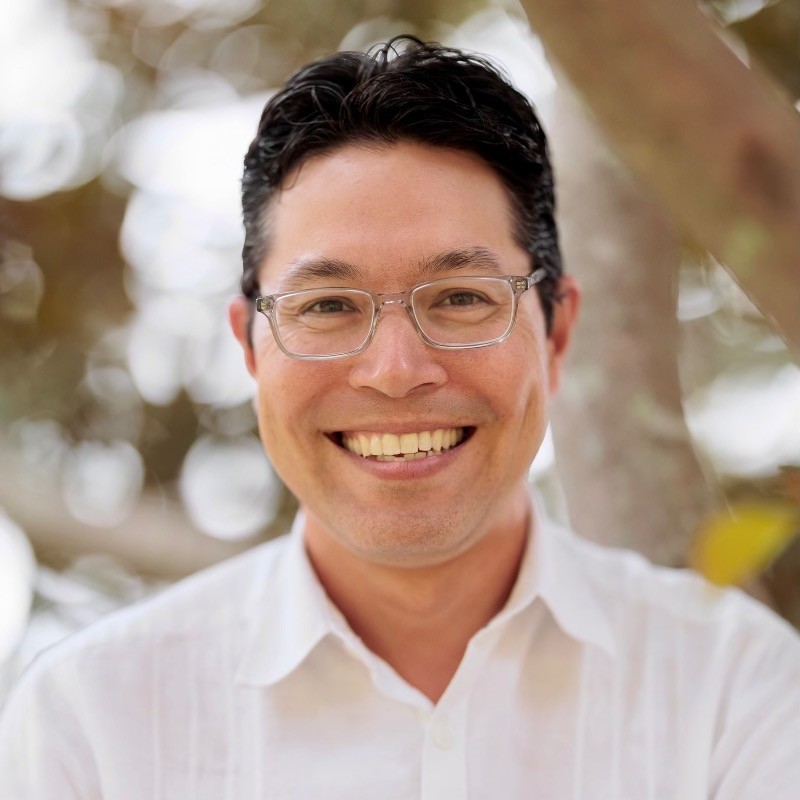
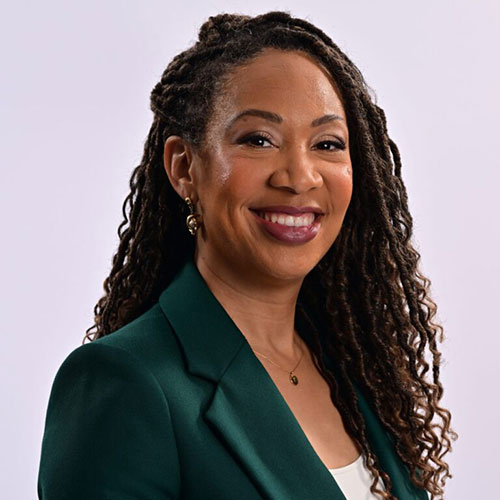
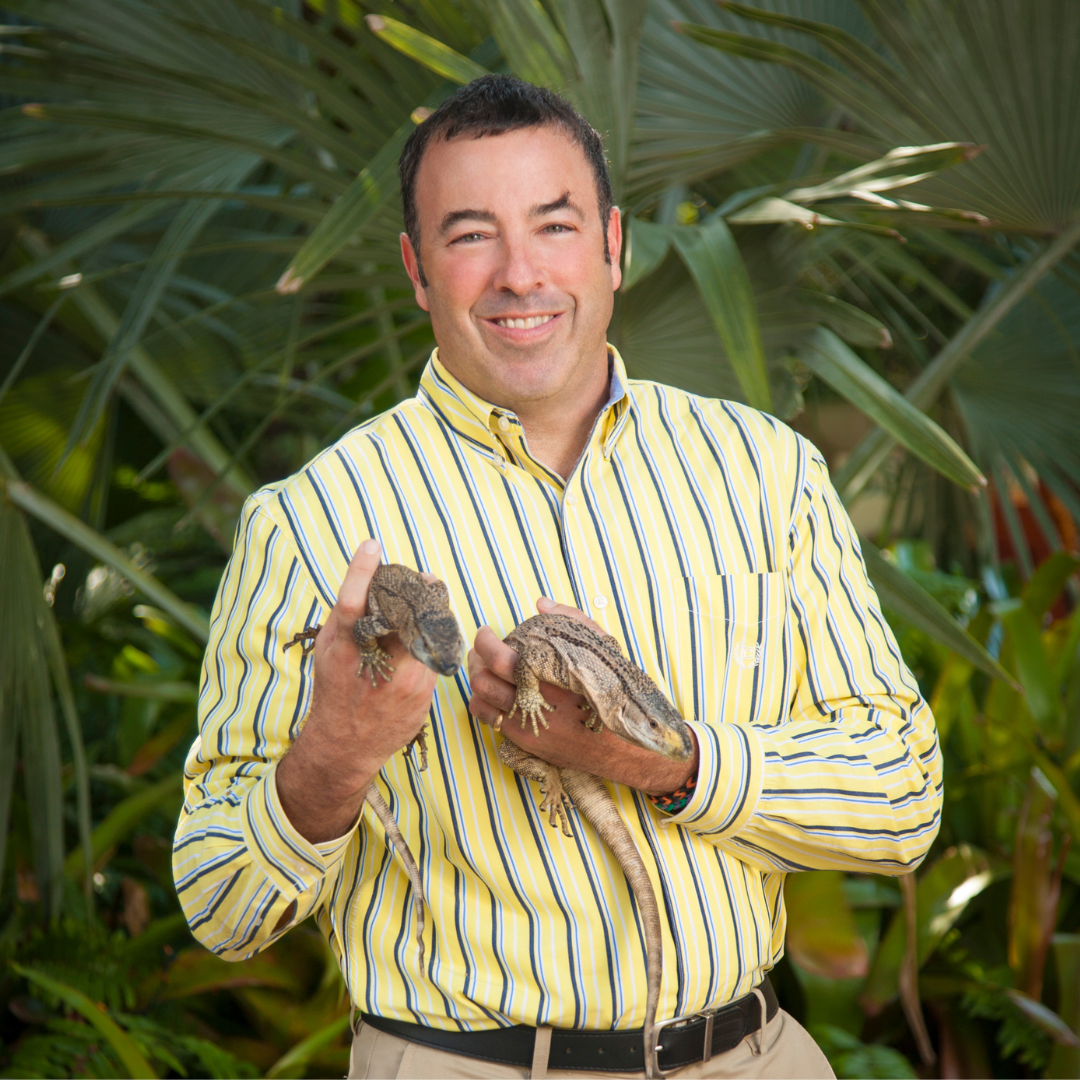
In this episode, SalterMitchell PR President Heidi Otway and Florida State Parks Foundation Board President Matt Caldwell discuss what makes the Sunshine State's public lands so extraordinary. As a seventh-generation Floridian and a conservation advocate, Caldwell’s passion for land stewardship runs deep.
Listen to hear about Florida's crystal-clear springs, best-kept-secret spots and how we can all help keep these natural treasures alive for generations to come.
Heidi Otway: Hi Matt, it's so exciting to have you on the Fluent in Floridian podcast today. I'm so thrilled that you agreed to be a guest on the show.
Matt Caldwell: No, absolutely. Looking forward to having a great conversation.
Heidi Otway: Yeah, so you've served in Florida in so many ways as a state legislator, you're currently the Lee County Property Appraiser, you're an advocate for agricultural and natural resources, and now you're serving as the President of the Florida State Parks Foundation Board of Directors. And so for our listeners who may not know, tell us about the Foundation, what you all do, and what its role is in helping improve and keep Florida's natural resources in place.
Matt Caldwell: Absolutely. This—it's really a fantastic opportunity. Listeners are probably most familiar with a local friends group, you know, friends of their local state park, and they'll recognize their role is to really help wrap around services, fundraise for improvements in the park. And so ultimately, the Foundation at the state level is really that friends organization for the entire park system—all nearly 180 parks now. And looking at what are the things that we can do beyond the necessities, right? We've got a great state park system, they do a fantastic job of really meeting the basic needs of what the constituents and the tourists are looking for, but how can we help elevate? And that's whether that's building new facilities, whether that's helping augment and replace aging infrastructure, we're always looking for what's a new and interesting way that we can help the entire park system continue to head to the next level.
Heidi Otway: I didn't realize that there were 180 state parks in Florida. I had no idea until you just said that.
Matt Caldwell: Yeah, I think the official count—now I'm going to get called on this, I think it's 176, but it also depends on how you count them because we have some—the park system also manages the preserves with more low impact facilities as well. But yeah, it's one of the largest state park systems in the country and certainly we think the best park system in the country.
Heidi Otway: Well, I would agree with that, because for a few of my birthdays in the past, instead of going to restaurants and going to, you know, like theme parks, I took my family on my birthday to state parks. And I remember specifically we went to Falling Waters State Park for my birthday, and my kids were a little like concerned, because it's so like nature, it's natural, it's not, you know, built up or anything. So we're walking down these trails, beautiful, you know, trees, and every time they heard something rustling in the woods, I said, "Listen, it's going that way, it's not coming towards us. We're going to be okay." And I just got to share this one thing that happened. I was standing on a dock and we were overlooking this beautiful brook that was like, um, we were on the dock above it, and what I didn't realize is that right under my belly, nestled in the um deck was a snake. And the whole time I'm standing there talking, taking pictures, and I took a few steps back, you know, just to take a photograph, and it moved, and I said, "Oh my god." So a real encounter with nature, all is well.
Matt Caldwell: Well, you survived in good fashion, it seems. But it really is the, you know, the role of the state park system is to be the point of interaction for the vast majority of our citizens and our tourists. The main way that they're going to get an opportunity to interact and see real Florida is going to be through our park system. It's really the gateway to natural Florida, is what I call it.
Heidi Otway: Yeah, and you know, the other thing that I think about is that, you know, as Florida grows and we see more development, I'm just so thrilled that we have organizations that are preserving our natural spaces and natural places. So tell us more about what people can do in state parks, because I don't think—like I said, I saw this, you know, I saw the waterfall, I saw the snake, we saw all kinds of critters and everything. So what can families experience when they go to one of our state parks, or even, you know, an individual who just wants to explore nature?
Matt Caldwell: Yeah, so Florida has a really wide array of outdoor opportunities. We several years ago instituted what's called the Florida Wildlife Corridor. It's really a holistic, statewide view of preservation of both plant and animal species and habitats. And we manage it through different layers.
There's conservation easements where agriculture stays on the landscape, there's wildlife management areas where the real focus is hunting and fishing, you've got the forests which is really about making a working commercial resource, and then you've got the parks. And that's what I was referring to a minute ago, is the parks is really tasked with preserving the natural resource and making it accessible to everyone, right? So this is where you're going to have the springs that you can go swim in, this is where you're going to have the waterfalls and the creeks, you're also going to have some of the best beaches in the country, and you're also going to have preservation of historic resources: so forts, and in some we have towns that have been preserved, historic buildings of all kinds of variety.
These are places that folks, again, both residents and tourists—and a lot of tourists, it probably might surprise people to realize the park system is on par with the biggest tourist destinations in the state in terms of visitation. When you look at the number of people that come to the park system, it rivals Disney and Universal Studios. So it's a massive economic engine, and again, the way that the vast majority of people are going to get a chance to see those natural sites, whether it's fishing, boating, kayaking, hiking, picnicking—all the things that you think of that you do at a park, the park rangers are there to facilitate.
Heidi Otway: Yeah. Matt, thank you for sharing all that depth about our state parks, because I just I love them. I mean, from Wakulla Springs to the Florida Caverns, you know, these parks I take my family to, and now I have grandkids, and I'm looking forward to taking them to have these special experiences. So before you moved into the current role that you have, you served in the Florida House of Representatives. And I want to know how your work on issues tied to agriculture, natural resources, water policy, infrastructure, and government operations has shaped your role, your current role right now?
Matt Caldwell: Well, certainly my passion has always been there for Florida. My family's been here, it's 200 years this year, since 1824, seven generations. Well, it is an amazing stat. Of course, I had almost nothing to do with it other than being born, but it is really cool, and it gives you an appreciation for what makes this place so unique and different compared to the rest of the country and the world. And so that passion certainly has always been there. It's what drew me to be involved in those issue sectors when I was in the legislature. And having term-limited out and been invited to join this board several years ago, it's really been an awesome opportunity to continue to feed that passion. It certainly hasn't hurt that I've still got great relationships with folks, the decision-makers, both in the executive and legislative branch in Tallahassee, so they've made sure to use me and put me to work knocking on those doors and telling the story of the park system and why continuing to invest in the state park system is only good not only for our residents, but again, the economic feedback that it provides as well. It's really a fantastic story to share.
Heidi Otway: Yeah. You talked a little bit about your timber and cattle businesses a little bit earlier. Can you tell us more about that? Our firm has done work with some large landowners in the state of Florida, and we also worked on the Florida Wildlife Corridor for the very first 100-day, 1,000-mile expedition. So tell us a little bit more about your work in that industry.
Matt Caldwell: So, they're both relatively small compared to the big operators. This is really almost more of a personal passion, but I've got some property in North Florida, Jefferson County, managing that just down the street, and managing that and converting it mostly to longleaf timber. And really the impact, the positive impacts you see from the habitat response as you bring it back to a more traditional natural state, still focusing on opportunities for commercial productivity—it's got to pay for itself—but and then here in Southwest Florida where home is full-time in the Fort Myers area, myself and a couple other long-term friends have gone in together in the last few years and done very well with a relatively small, again, cattle herd, but to our success, to our satisfaction, it has turned out well. It's only gone in the right direction over the last six years.
Heidi Otway: Yeah. So you talked a little bit about the land that you have here, especially the timber, and I just remember how we had a series—like we didn't have a hurricane last year, and it seems like we may not have too many hurricanes this year, but if you recall Florida, North Florida especially, got hit by some major storms, and my understanding is that the timber industry was really impacted by those storms. So can you talk a little bit about, you know, what the Foundation does, if it does, in respect to helping restore major places and spaces, our wild spaces after a natural disaster?
Matt Caldwell: Well, in fact, Hurricane Michael, which was so devastating back in 2018, one of the earliest projects the Foundation pursued—we kind of elevated our game starting in 2019, a lot of great serendipities, Providence provided us resources and staff. And one of the very first things was Plant a Pine. And so, coincident with Earth Day, we have planted somewhere I think above a half a million longleaf pine seedlings throughout the park system in the last seven years. A lot of credit to our CEO, Julia Woodward, who was really a leader in that project and getting it rolling, and appreciate all the donors. I know Bass Pro and several other major corporate sponsors have helped facilitate that as well as individual donors. If you follow the Foundation, you'll see the web advertising we do to encourage people to donate, even just a dollar, to facilitate that Plant a Pine program. Really has been a great success.
Heidi Otway: Well, I love hearing that because I remember driving to Mexico Beach, you know, after the storm and just seeing the devastation, and then now when I travel, it's refurbished, it's come back. The pines are not where they were before, but you can see the growth and the difference since that time. So thank you all for everything that you did.
Matt Caldwell: Absolutely. No, it's been a fantastic project. The, you know, the longleaf ecosystem is one of those rare ecosystems. It doesn't exist anywhere else in the world. It stretches from about Louisiana up through the Carolinas, but Florida was really the heart and soul of that unique ecosystem, and we only have somewhere less than 5% of that native habitat still remaining. So all of these projects, the way that we give back in restoring that is only beneficial in the long run.
Heidi Otway: Yeah. So I hope everyone is enjoying this conversation. We're going to take a quick break for a short message from Salter Mitchell PR.
Heidi Otway: So Matt, let me talk about the Foundation and the work that you're doing to support park rangers. We touched a little bit on the restoration projects, and then any other partnerships that you all are doing to make improvements across the state. So what are some of the current efforts that you're working on, and of course, I want to know what are you most proud of at this time?
Matt Caldwell: Well, one of our main goals every year is to advocate for the park system through the legislative budget process. So this last year, those that follow the process might recognize it's been a couple years of challenge. The budget's been delayed both years, trying to navigate that process. What is fun advocating for the parks is it's really all white hats. There's nobody that dislikes the parks, it's really just convincing them to allocate the additional resources. But we were able to successfully advocate alongside the governor's team to get full funding that they requested for long-term capital infrastructure, so maintenance and replacement, again, dealing with hurricanes especially, there's a lot of physical infrastructure has to be repaired after those, as well as several projects for expansion of facilities: camping opportunities, RV opportunities, another one in Central Florida that would expand horse riding opportunities. So again, ways to interact with the parks. I think the sum total was somewhere around $50 million that the state funded through the advocacy, and also a small increase in pay, well deserved for our park rangers. Our park rangers really passionate, excellent folks. They really do it not for the money, but because they love the parks, and we're just glad that we were able to push that up the hill a little bit more this year and get them a little extra to recognize the great job they do.
Heidi Otway: Oh, I'm really glad to hear that, and you know, one of the things that I think people don't realize is that when they visit a state park, they see how beautiful it is, they don't realize that it takes maintenance to keep everything looking, you know, pleasant and beautiful and still natural. So what do you wish more people understood about what it takes to protect and sustain our state parks?
Matt Caldwell: Well, that's certainly true for the historic resources. You mentioned Wakulla Springs earlier with the historic lodge there, over a 100-year-old building. Anybody that's owned an old house knows what it takes to maintain, and no less so when you get thousands and thousands of visitors coming through the building every single year. So they do a great job reinvesting in the physical infrastructure, but it's also again maintaining the natural resources. We've been super proud of being able to help distribute electric equipment throughout the five—there's five regions in the state in the park system, and delivering to each of those regions over the last couple of years electric blowers, electric weeders, electric chainsaws, electric bikes. And as you think about managing the park, right, the electric tools are lower noise, so they don't disturb the wildlife, they don't disturb the visitors. You know, the electric bikes let the rangers access the back country of these parks rapidly and quickly, both for emergency response, but also carrying that electric chainsaw on their shoulder as they go back to do the trail management. And a lot easier to carry an electric chainsaw on your back, and a lot easier to get back there on an electric bike than driving, you know, a four-wheeler or something that just has a different impact on the natural resource.
Heidi Otway: Yeah. Well, I was pleased to see like on my recent visit to Wakulla Springs, they have the new boats that allowed us to go out, you know, and see the alligators and the vegetation, and they were much quieter than the ones I remember when I was a college student.
Matt Caldwell: That was a great project we helped work on, putting—yes, we worked with them to get—they do have a little gas motor cuz coming up against the current to come back, they got to get a little more power, but going out and visiting, they run on the electric. And we also, that newest boat, we had specially made and designed to be disability accessible. So people can get on there in their wheelchair or other equipment that really wasn't a possibility with the older boats.
Heidi Otway: Yeah, well, thank you for doing that, cuz I literally took my whole family, including my 80-plus-year-old mother-in-law, and we had a blast! We had a great time.
Matt Caldwell: Yeah, it really is a spectacular way to view the resource. I mean, those that haven't been, you need to go to Wakulla, to Silver Springs, to Homosassa, where you can get in the boats with the glass bottoms and interact with the river and the springs in a way that you just wouldn't otherwise be able to. It gives you a really fascinating and unique perspective on the waterways there.
Heidi Otway: Yeah, and you know, the other thing is I took my kids with me, and like I said, whenever I go to state parks or—I'm a former Girl Scout troop leader, so my kids and I, we've, you know, stayed in the woods overnight in state parks and things like that. So I always think about the next generation of Floridians who want to continue to protect our natural resources. So what role do you think that young people should play in protecting Florida's parks and natural resources?
Matt Caldwell: Well, young people are what it is ultimately all about, right? We talk about it enough, sometimes it sounds trite, but the things that we do today are about leaving it to the next generation for them to inherit and enjoy, and then hand off from there. You know, the park system, one of the great opportunities it provides is it's accessible to all income levels, and all ages, and all backgrounds, right? Senator Jason Brodeur told a story at our legislative reception this last spring, how when he was a young kid, they didn't have the money to go to Disney World or visit, you know, travel to Europe or some fancy trip. For them, it was taking a backpack tent and going to your local park, where the entry fee was $2, and you could cook out hot dogs. For me growing up, my home park was Koreshan State Park down in Estero, and I've got reams of photos of us cooking out hot dogs and playing roll-a-bat and going up and down on the jungle gym, because that was the thing that we could do that worked no matter how much or how little you had.
Heidi Otway: Yeah, I love that. I love that. And then when you look ahead, what gives you hope for Florida's future and the future of our state parks?
Matt Caldwell: Well, our state parks really have, as I talked earlier, it's such a white hat opportunity in an era where politics can be a little fraught. We really don't have to worry about those conflicts, and we've got a broad commitment, bipartisan commitment in this state to investing in our natural resources. So I'm excited to see the parks continue to elevate their game. You know, there's a nationwide contest between state park systems for a gold medal. We're the only four-time gold medal winner. The closest behind, I think has two—I can't remember, maybe Delaware, whoever has two—but they're always all trying to catch up with us, and we're very proud of what they've done to invest. And again, no shade to the national parks or the other state parks, but I think if you've just been to visit one of ours, the bathrooms are nice and clean and bright, and in good condition, and the parking lots are paved, and you can interact with the resource. I've been to a lot of other state parks, and there's a reason we're winning the gold medals, and we're going to continue to push to keep that spot.
Heidi Otway: Well, I love hearing that. And so Matt, for anyone who's listening who's never been to a state park, where should they go to learn information about the ones in their area? I will tell you, I did a Google search, I pulled up a map of Florida, typed in "show me all the state parks," and I was just like, "Oh man, they're everywhere all over the state." So tell people where they could go get information, and what would you say to encourage them to go experience it?
Matt Caldwell: Well, you can go to the State Parks website. You'll see that map, you'll see there's parks within every single region of the state with a wide diversity. You're always within, I would say no more than an hour drive from any experience you want, whether it's the beach or the cypress woods, whether it's horse trails or kayaks. You can get into whatever really turns you on in pretty short order, and again, for very low cost relative to any other experience. And I would just encourage not only our residents, make use of this. I mean, this is yours, it belongs to us as the people of Florida. But make sure when you get your cousin that comes and visits from out of state, take them to the park, right? As much as you're going to go see all the really amazing commercial opportunities we have for tourism here, make sure they don't leave before they've at least gone to visit one of these parks and get a chance to see the native flora and fauna of that region and get a chance to really appreciate Florida for what it is at its core.
Heidi Otway: Yeah, and Matt, I will have to tell you that as I was looking at the map, I did not know Weeki Wachee was a state park with the mermaids! That blew me away! I was like, I've passed by there, been there, and I had no idea.
Matt Caldwell: Well, that's been a new development over about the last decade. Silver Springs, Weeki Wachee, Homosassa, these were all tourist destinations, and of course, the commercial tourism has kind of changed. These places were in danger of really disappearing. And so the legislature and the park system has embraced taking these on. So not only do we preserve the natural resources—because the three I just named are at the headwaters, the spring headwaters of three wonderful rivers—so the natural resource, but also the historic resource, being able to see these tourism destinations, the mermaids at Weeki Wachee for sure, Silver Springs again is a really awesome and interesting park with all of the historic tourism venues. So it's really a dual mandate that they're pursuing there, both on the natural resource and the historical resource side.
Heidi Otway: Yeah. So Matt, I want to thank you and the Foundation for everything you're doing for the state of Florida. It was a pleasure speaking with you today, and I know our listeners and viewers got a lot out of this, and I hope y'all go visit a Florida State Park. I promise you, you will not be disappointed. So thank you, Matt.
Matt Caldwell: Amen, thanks for having me.
Heidi Otway: Okay, thanks.
Be notified when new episodes of the Fluent in Floridian Podcast are released and receive public relations, communications and marketing expertise from SalterMitchell PR.
SalterMitchell PR is a full service communications consultancy helping good causes and our clients win. For 25 years, we have provided strategic insight and guidance to organizations seeking to make an impact in the nation's third most populous state. We know Florida. We understand the diverse landscape of Florida. We are fluent in Floridian.
Tallahassee Headquarters located at:
117 South Gadsden Street,
Tallahassee, Florida 32301
(850) 681-3200
Copyright © SalterMitchell PR 2021. All rights reserved. Privacy Policy.