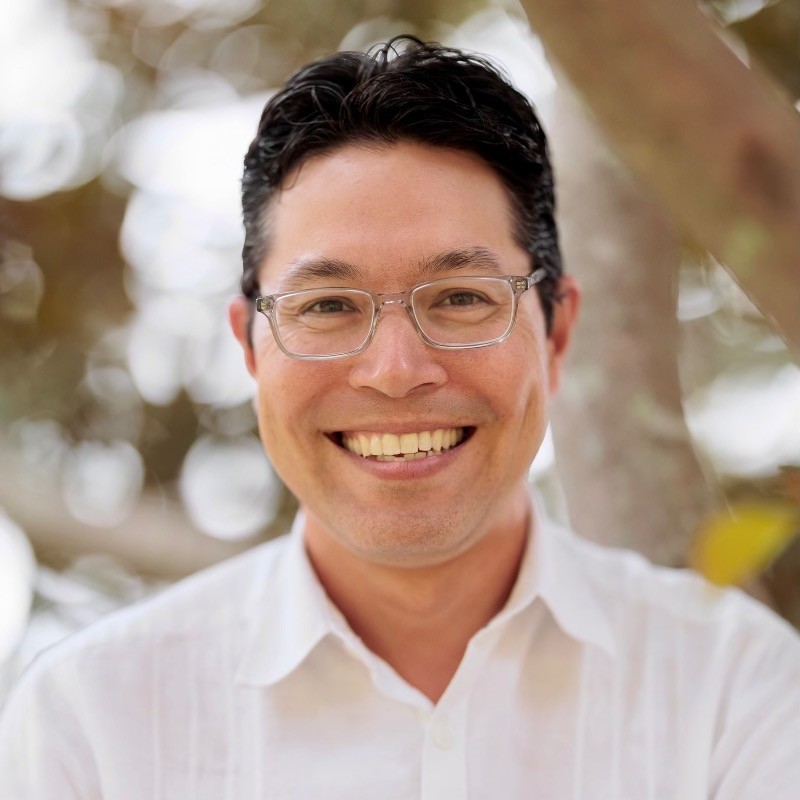
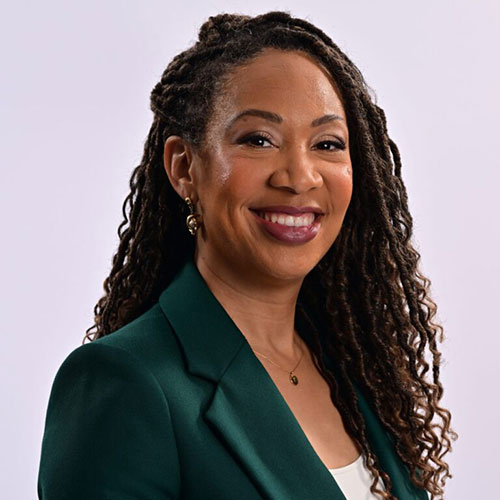
Heidi Otway Mike, welcome to the Fluent in Floridian Podcast. We're so excited to have you today from one of my favorite cities in Florida, Tampa Bay.
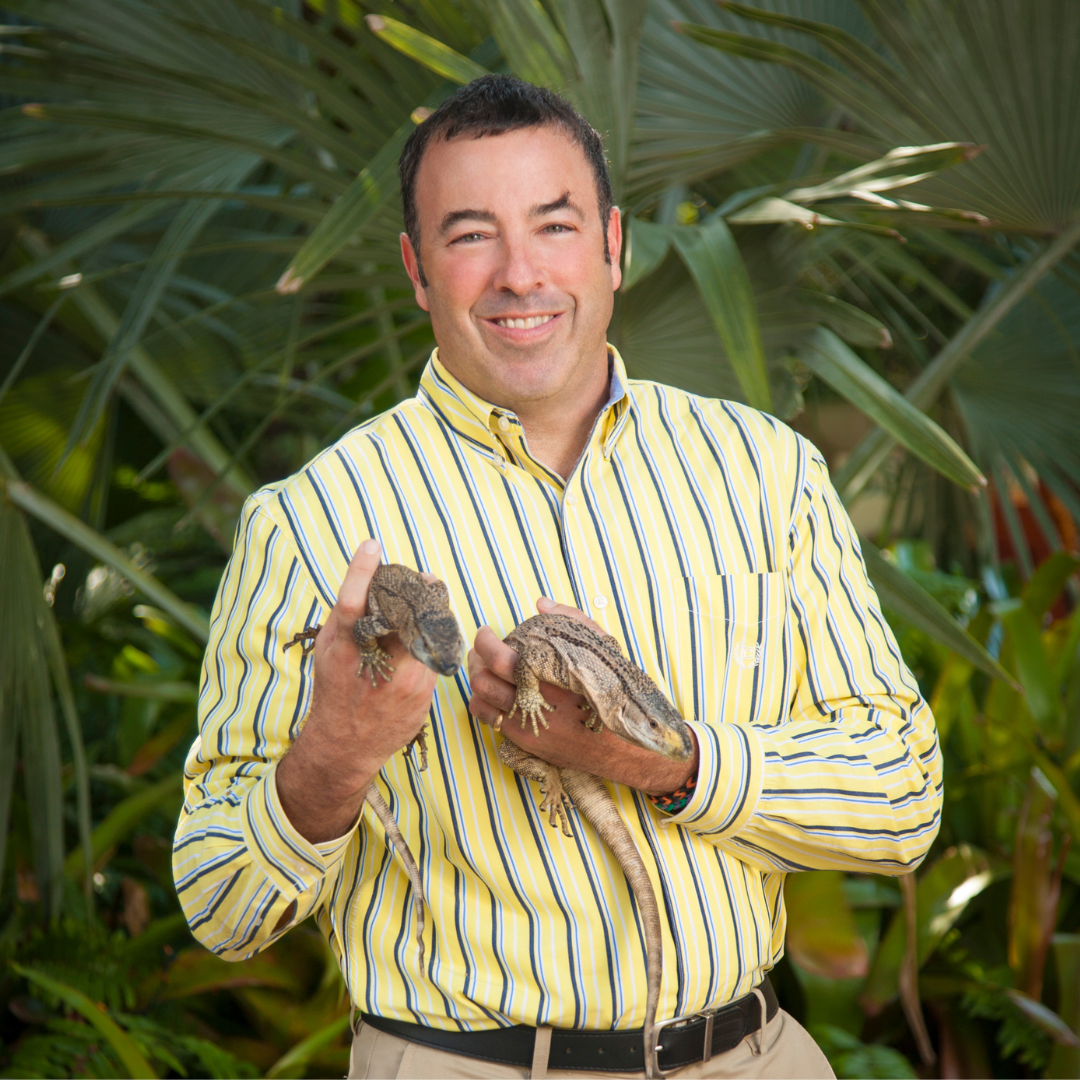
Mike Sutton: Thank you for having me. I really appreciate it.
Heidi Otway: So you grew up in the Bay Area. So tell us about your early years. Let's go back to the beginning. Tell us about your early years growing up in Tampa Bay.
Mike Sutton: Yeah. My family moved down to Tampa from New Jersey when I was eight years old. And so I consider myself a Floridian. I consider myself from here just because I don't really remember anything from up north. But grew up in Tampa, North Tampa. When we first came down, we were in the Odessa area and also Carol Wood. Went to Gaither High School and graduated from there. My parents actually split when I was in high school, so I actually stayed home for college. So I'm a graduate from USF, University of South Florida. Go Bulls.
Heidi Otway Yeah, go Bull. Yeah.
Mike Sutton: But yeah, so I love this community. I love this area. It's been phenomenal to just watch the growth over the years from kind of a sleepy town, especially I live over on the Pinellas side of the bridge now, and this was the area you'd go to for the beach or to retire.
And so it's been phenomenal to just watch the growth happen.
Heidi Otway: Yeah. And we're going to get to that a little bit, but I want to learn a little bit more about you and what led you into nonprofit leadership.
Mike Sutton: Yeah. I was blessed growing up and wasn't really exposed to any sort of extreme poverty until I was in college. I started a job with the YMCA while I was in school and I worked out of the Center City Y, which was in the Tampa Heights area. And back when I was in college, Tampa Heights was really a really struggling community, very underserved, a lot of crime. And it was my first exposure to a community of that nature. And when I was working at the YMCA, I recognized how much the young kids would just gravitate towards you. They wanted steady adults in their life and just showing up every day was an important piece to that.
And it really pulled at my heartstrings. And the more I was doing this work in college, the more I realized, wow, I really feel a fulfillment here. I really feel like I'm making a difference.
And again, if say I missed the day of work because of an exam or just scheduling, these kids cared so much about like, "Why weren't you here, Mr. Mike? Where were you yesterday?" And I realized part of showing up was so important. And I found really quick that I could make a career in nonprofit. There were a lot of stigmas around the nonprofit sector.
I didn't think you would make a living or you would live in poverty to work in the nonprofit sector. And I found out real quick that you get hooked up with the right organization, you have career ladders, you have career growth opportunities, and you can also make a difference and change your community. And so that for me was really kind of the driving factor behind it, was just that work I did with the YMCA while I was in college.
Heidi Otway: Yeah. And then you stayed on with them a little bit longer after that, right?
Mike Sutton: Yeah, I worked with them for a total of, I think, almost five years. And so right after college, stayed on for a little bit, moved up really quickly into a director level role and again, realized like, okay, I'm going to build my career here. And so I often joke that my degree is a criminology degree and I used to want to go into federal law enforcement, but now I use my degree when I watch Law and Order or Chicago PD. I feel like that's how I get to use my degree in a little bit. So I get into those shows a little bit more than probably the average person.
Heidi Otway: Yeah. Yeah. My husband's former law enforcement, so he loves those shows as well.
Mike Sutton: Oh, okay.
Heidi Otway: So Mike, you've been serving as president and CEO since 2014. Can you tell us how you landed this role, the current role that you have in your hometown?
Mike Sutton: Yeah. I came to Habitat almost 12 years ago, never really with an idea that I would serve as a CEO in the nonprofit space. My background had been in fundraising and community development, and I really enjoy that work. And that's the part of my job I love the most, is being out in the community, raising awareness, raising funds. But I had worked with Habitat prior.
So when I left the YMCA, I worked for my college fraternity for a couple years and I traveled around the country. And one of the places I ended up landing was out in Texas and decided to lay down some roots there and stay in that community for five years. And I worked with Habitat during that time. So spent five years as the director of development there for a habitat affiliate. And after five years, I decided I really missed being back home.
I missed my family, missed my friends, and I missed everything that Tampa Bay has to offer and being around the water. And so I decided to move back to the Tampa Bay region in 2009, got hooked up with Big Brothers, Big Sisters as their chief development officer, again, raising funds and raising awareness. And then Habitat came calling a few years later. They were doing a search for their next CEO and there was this opportunity, and because of my background with Habitat in Texas, they really wanted to talk to me about it and all things led to me accepting the position.
So here I am 12 years later, we've built a phenomenal team that's really focused on growth and impact in our community and just so proud of the work we've been able to do.
Heidi Otway: Yeah. And I'm sure that a lot of our listeners and viewers are familiar with Habitat, but can you tell us, what do you all do to help families and how can people get involved?
Mike Sutton: Yeah, there's so many misconceptions about the work that Habitat does. A lot of people think we build homes and give them away for free. A lot of people think that we serve the homeless population. At the end of the day, Habitat is focused around partnering with families and individuals who purchase a house from Habitat. We provide a zero interest mortgage. That's really what differentiates us from a normal bank.
So we provide a zero interest mortgage to low and moderate income families. These families would not normally qualify for traditional home loan because they don't make enough income. On the flip side, they make too much to qualify for government assistance. So they're stuck in this weird spot and they're normally paying somewhere between 50 and 60% of their monthly income towards rent, so there's no way for them to get ahead.
Heidi Otway: Right, right.
Mike Sutton: So the Habitat program provides them an opportunity to anchor down in our community by purchasing a house through our program. There's no down payment required. We don't require private mortgage insurance, but that 0% interest mortgage is what's key to keep the home affordable, and it helps them achieve their dream of homeownership.
Heidi Otway: Yeah, that's amazing. And what I love about Habitat, just seeing it here in the North Florida area, is that volunteers play a huge role. So can you talk a little bit about the role of volunteers in helping your mission?
Mike Sutton: Yeah, it's really the lifeblood of our organization. Volunteers help us to keep costs down on the build. So they put in about a thousand hours into each home we build. So our particular Habitat affiliate that serves three counties, we built 88 homes last year. And so you kind of do the math. You think about it, a thousand volunteer hours per home, 88 homes, that's a lot of volunteers we need.
The volunteers come out, they help with things like building our interior walls, installing the windows, the doors, installing countertops, cabinets, the baseboards. They also help with painting and landscaping of the home. And all of that work, again, helps to bring the cost down on the house, but it also allows folks to engage in the work that we're doing. There's a tangible experience. We provide a team building experience like no other. It really allows folks to kind of put their faith in action, get out and swing a hammer with us. And at the end of the day, they can take a step back and say, "Wow, I helped to build that." And that's really kind of a uniqueness of the Habitat mission.
Heidi Otway: Yeah. On average, how many homes do you build a year?
Mike Sutton: So this past year we built 88, the year before that, 81. So we're in the 80s right now. We've built an organization that has grown year over year for 12 straight years. So it's kind of an expectation of our board now. And so this year we'll do somewhere in the 80s. Next year we're expecting to kind of jump into the 90s.
Heidi Otway: Yeah. Well, that kind of aligns with the trend of Tampa Bay being one of the fastest growing cities in Florida and the nation. So how have you seen the community change in reference to the work that you're doing and how has that impacted your work in general as far as identifying the families and the volunteers and the support that you need to continue to build more houses that are affordable?
Mike Sutton: Yeah, great question. As someone who has spent almost their entire life here in the Tampa Bay region, one of the things that always sticks out to me is, when I was graduating from college, from USF, all my friends moved away. You would finish your degree and you would move to a larger city or a larger region in order to start your career.
And what's so great about the Tampa Bay region now is there's so many of those opportunities here. So we're seeing so many people that are staying in Tampa Bay or even moving to Tampa Bay to start their career.
On the flip side of that, we've seen so many businesses that have anchored down here in the Tampa Bay region, businesses that have moved here, that are growing. And Tampa Bay has become a hotspot. It's become a place where people want to move, they want to grow their family here, they want to start their families here.
It also continues to be a region where people like to retire. I like to say that we live in paradise every day. And so for us at Habitat, we see the need for affordable housing, it's a bigger concern on a daily basis. With all the excitement of people moving to the Tampa Bay region, it's also caused real estate to increase significantly.
And so I often say that if we want Tampa Bay to continue to be a place where people want to live and grow and to be, we have to have affordable housing for the people we rely on every day. So at Habitat, we see a lot of school teachers, school bus drivers, healthcare professionals that come through our program, and they're being priced out of our region. And so we got to figure out a way to keep them here. And so that's kind of been a big focus for what we do. We're just one piece of the puzzle, but if we do it really well and there's others like us that are doing the same work, we'll continue to find places for people to live.
Heidi Otway: Yeah. So how does all of that fit into your vision for the organization moving forward?
Mike Sutton: Yeah. So again, along those lines, there's a huge shortfall of affordable housing in our community.
I often ask folks when they go out to eat, do they recognize when they walk in somewhere that maybe the restaurant's half empty, but yet there's a 45-minute wait. And a lot of that is because we can't, number one, attract, but also keep the working class in our community because they're getting priced out.
And so for us, there's no shortage of need. And so we'll continue to find ways to collaborate with municipalities as well as the private sector to ensure that there's affordable housing opportunities in our community. So it's really that public/private partnership coming together to ensure, again, that people have a place to live.
Heidi Otway: Yeah. So anyone who's listening, who's a corporation or they support the mission that you're doing, what's the best way that they can engage with your organization?
Mike Sutton: Yeah, so there's obviously a huge need for volunteerism. So we always are in need of volunteers coming out and swinging a hammer with Habitat. In addition to that, the financial needs to support an organization like ours, we're a 40 million plus annual revenue organization. That's a lot of money that we raise here in our community. And so we continue to need corporations, foundations, and individuals to step up and support the work that we're doing.
Heidi Otway: Mike, how do you approach growing partnerships with banks and businesses and local governments to support Habitat's mission?
Mike Sutton: Yeah, great question. So we have this ability at Habitat to not only engage the corporate world as well as municipalities in the government sector, we have the opportunity to engage them from a volunteerism standpoint. So they can come out and swing a hammer with us and support the community. On the flip side, we can also provide the service to their employee base that is looking to own their own home.
And so for us, it's really about creating a win-win partnership. We don't want to be seen as the nonprofit that just has their handout and is always looking for dollars and for that volunteer component. We really want to truly find a way to collaborate and for it to be a win-win. So we sit down with corporations and businesses, foundations, and with government entities all the time to really figure out how can we best collaborate and work together to ensure that folks have the opportunity to own their own home.
Heidi Otway: Well, that's amazing. Can you tell us about your new 57 home community called Lealman?
Mike Sutton: Yeah. So in the Lealman community of Pinellas County, it's one of the most underserved communities. It's just north of St. Petersburg, south of Largo, Clearwater area. And it's an area that has historically lacked reliable transportation. It's considered a food desert, but yet it's also one of the... In Pinellas County, which is a peninsula on a peninsula, it's one of the highest areas of the community from a storm surge standpoint. So it's desirable from that standpoint.
And so it's been an area we've been focused on for a number of years. We've built probably a hundred homes in the Lealman community just in the last six, seven years. And we were awarded some property through the county to build more single family as well as some town homes. So about 57 total units we'll build over the next two to three years. We're very excited about it because it's a desirable area for the families we serve.
Typically, when we're talking to families about where they want to live, it's centrally located in Pinellas County. It's easy accessibility to the interstate. You're just 15 minutes from the beach, and then you're very close to downtown St. Pete, you're close to areas of North County. And so we're excited.
We're breaking ground on the first eight homes there within the next two weeks. And we anticipate getting those homes completed and getting folks living in those homes in 2026. So if folks are interested in potentially going through our program, there's still time. If folks are interested in swinging a hammer and helping us to build those units, there's definitely still time there as well. So it's a really exciting time for us in terms of the work we're doing in Lealman and there's definitely tons of opportunities for folks to get engaged with us.
Heidi Otway: Mike, I could imagine that the work you're doing is very exciting and also almost like an emotional thing because you're helping people achieve the American Dream. Can you share a story that just really sits with you? I'm sure you have many, but tell us about that one that really sits with you for the impact that it had not only on you, but also on that family.
Mike Sutton: Yeah. So I'm a little biased. I think I have the best job in not only Pinellas County and the state of Florida, but in the entire country. I love Habitat, love the mission, and I love the opportunity to serve. Every single family we serve is its own unique story, and that's really what's so awesome and fascinating about Habitat.
The one thing everyone has in common is they're looking for the opportunity to own their own home, but their background and their story and how they get here and their journey is so unique. I often gravitate towards the children. So the families we serve, the families are typically moving home to home year after year because they're seeing such an increase in rent.
And so for them, it's like, okay, the rent just went up. They have to find something that's a little bit more affordable. And what that does to the children is it stunts their growth.
They're moving every year, so they're having to relearn or start new relationships, make new friends.
And we recently had a home dedication where the mom had kept it a secret to their kids that she was going through this program and they were going to be buying this home. So when they pulled up to the home dedication ceremony, her daughter and son got out of the car and the son said, she explained, "This is going to be our forever home." And the son said, "So we never have to move again?" And that to me really just kind of encapsulates what we do at Habitat, that we are kind of changing the trajectory of these families' lives for the better.
And so these kids now have the opportunity to establish roots in these homes. They now have a safe and affordable home that they're going to grow in. They have their own place to do homework, they have their own room. It's so neat.
And it's the stuff that a lot of times, I know for me, I took for granted growing up. My parents provided, they were phenomenal when it came to that. But for these kids, the opportunity to grow up in their own home is huge and is really kind of where life starts.
Heidi Otway: Mike, I can't thank you enough for being a guest on the Fluent in Floridian Podcast. That last story, I just got all warm, right? Because you're right, stability is everything when it comes to family, right? And so I want to thank you for everything that you do. Thank you for being a guest today.
And I hope that everyone who is listening and watching will consider supporting your organization or your local Habitat for Humanity because you all are making an impact in Florida that is quite remarkable. So thank you again.
Mike Sutton: Yeah, appreciate you having me. Thank you so much.




.png)


%20copy%202.png)


%20copy%202.png)


.png)
%20copy.png)




%20copy%202.png)