


%20copy%202.png)

.png)


%20copy%202.png)


%20copy%202.png)


.png)





Tallahassee Headquarters located at:
117 South Gadsden Street,
Tallahassee, Florida 32301
(850) 681-3200


Copyright © SalterMitchell PR 2021. All rights reserved.


%20copy.png)
Florida is home to extraordinary talent, fast-moving industries, and big ideas with global potential. That’s why Florida High Tech Corridor CEO Paul Sohl is working to prepare our state’s learners for the future, from pre-K students to post-doctoral researchers.
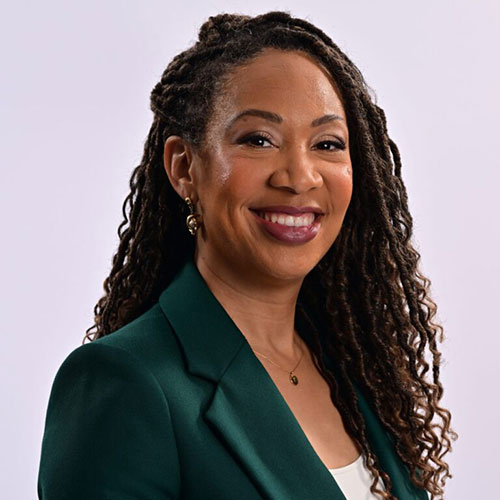
In this episode, SMPR President Heidi Otway talks with Paul about service, leadership and building the workforce of tomorrow. From Rear Admiral in the U.S. Navy to innovation leader, Paul is helping prepare Florida’s students, businesses and communities for what comes next.
Heidi: Okay. Paul, welcome to the Fluent in Floridian podcast. I am so excited to speak with you. I think you are probably the first person that is not a politician that has a Wikipedia page that we've had on the show. And I just feel honored.
And I also want to thank you for your service as a member of our US military. You spent 33 years serving in the US Navy, rising to the rank of Rear Admiral. And I just find that quite fascinating, just completely fascinating. So, thank you for being on the show today.
Paul: My pleasure, Heidi. And you had mentioned it earlier, I've spent half my life in the... That makes me feel old. And we'll talk about that. I loved serving our country. I loved every day in the Navy. I met my wife at one of my first bases, so I feel very blessed to be a part of that organization and now to be a vet.
Heidi: Yeah. Yeah. Well, we're recording this interview after the US just launched a military strike in Iran. And is there anything that you can share with our listeners and viewers just to provide some perspective and maybe some comfort in this time that we're in?
Paul: Yeah, no, thanks for asking. First thing is, I'll just share the story that often doesn't get told. The USS Gerald R. Ford, our newest carrier, was coming back, a couple of weeks ago, from an eight-month deployment with about 6,000 service members on board. And when given the order, they turned around.
Heidi: Wow.
Paul: You can imagine families that are there waiting. They're within a week to two weeks of seeing their friends and family coming home, and they're told to turn around. The same thing happened on September 11th. In fact, that carrier turned around without asking. The Navy is so special to me in its ability to do that, that my heart goes out to the service members, to what they do. And it's not just the sailors, it's the Marines, it's the soldiers, it's the Coast Guards and the Guardians.
All of them just do a tremendous job. To your comfort, I will tell you, I got a chance in December to be at the commissioning of some brand new naval officers and Marine officers at Embry-Riddle. We have nothing to worry about. Those young officers now are totally engaged and are super excited.
Heidi: Yeah. Well, I just want you to know, I just teared up a little bit when you were talking about those folks who went back. So, thank you for sharing that.
Paul: Thank you.
Heidi: Let's move on so I don't just [inaudible 00:03:20].
Paul: It is that service piece.
Heidi: Yeah. Thank you. So, let's talk about how you transitioned from the military to economic development and innovation. How did that happen? Did we lose you? Can you hear us?
Paul: I'm here.
Heidi: Did you hear my question?
Paul: This thing shows... It went dark for a little bit. Sorry.
Heidi: Okay. All right. So, we'll fix that. Okay. Now that I have myself together, let's talk about how you transitioned from the military to economic development and innovation.
Paul: Yeah. The Navy is really good about bringing you in. So, back in 1986, back in the day, I joined up. And then they're also good about telling you it's time to go. Summer of 2019, it's time to go. And it really was kind of an interesting time having spent 33 years in and going, "Well, what the heck do I do now?"
Great mentors helped me through it. One of the biggest, the benefits was don't rush the journey. And also, think about what are your guideposts? For me, leaving the Navy, and my wife and I talked about this a bunch, I wanted to be able to give back and I wanted to be able to learn something new every day. And I do believe that the universe conspires to make those things happen for people when they say, "This is kind of what I'm thinking."
And about six months after I retired, I got a call from a search firm saying, "Hey, we'd like you to apply to this thing called the High Tech Corridor." I had no idea what it was. I did some research. The more I thought about it, the more I thought this could be really cool. It absolutely aligned with what my wife wanted to do, and that is she's from California, but we had a tour in Jacksonville, wanted to come back to Florida. So, it all lined up.
And then I would say the board co-chairs for the Corridor, the three university presidents took a bit of a risk. I'm not an economic developer. I was kind of the outside candidate, and they took a risk and it has been an absolutely gorgeous journey for me personally, for our family, and for the team that I love talking about in the Corridor.
Heidi: Well, I love to hear that. So, for our listeners and viewers who may not be familiar with the Florida High Tech Corridor, can you tell them what it is and what you do?
Paul: Yeah. The first thing I'll say is this year we turned 30. And so we've been around for 30 years. And the reason I say that, Heidi, is because we stand on the shoulders of some giants back in the day who, from the state legislature, from the universities, from industry, who looked around and said, "You know what? We have this thing called the I-4 Corridor, and there are these amazing colleges, universities, industries. And if we don't do something to help build that innovation, then we're missing the boat."
And so they set up this thing called the Corridor. Now, fast-forward to where they are, where we are, today, the easiest way I describe it is we really help build, I'll call it innovation capacity, the ability to innovate. And that goes from the youngest kids in pre-K and K, all the way through the super senior researchers at universities that we set conditions around these 23 counties to make sure that they can innovate. And that really means driving super interesting solutions to what I would consider global problems.
Heidi: Yeah. So, can you give me an example of something that has come out of the corridor, the core partners within the corridor, that has been quite remarkable?
Paul: Yeah, sure. No, great question, Heidi. One of the programs that we run has been around almost from day one. It's called Matching Grants Research Program, MGRP is what we call it. And so both at UCF and USF, and those are two of the three anchor institutions, the third being the University of Florida, with matching grants every year, if a company wants to partner with UCF or USF to do applied research in the high-tech world.
And what that means is to do research to spin out solutions, to get them out there, we have dollars to match on top of their dollars that fund research at the university. The demand is huge, and it is just one of those things that whoever really designed it from the beginning was a genius, because the more we do, those projects then spawn other projects to go forward. It's really amazing.
Heidi: Now, how many, collectively, do you have data that shows the number of businesses, innovations that have been spurned out of this initiative, the Corridor?
Paul: We do. I'll tell you just... And I don't have it at my fingertips, but I will say that about every year we do about 25 projects per university. It depends a little bit. And very often because they are... If a company with an idea is going after research, they've got a pretty good idea that this thing can work.
And so if you look at the economic development numbers, we've been able to do those studies and it's over a billion dollars in economic impact. So, that means jobs coming to companies that are growing. It means supplying other workforce areas that may not be related entirely to that research, but it goes to other places.
The other thing that I will highlight for matching grants is we demand that students are involved with researchers and the company because those students getting a chance to do research very often, and it happens all the time, I get to talk to these students and a lot of them, they'll say, "I didn't think I would be really interested in research, but now I see that this kind of research can mean a solution to a society's issue that's going on there." They all of a sudden, many of them jump right into research and say, "I never would've thought I would like it." But then they really do and can move forward from there.
Heidi: What is the K-12 component within the Florida Corridor?
Paul: Yeah, great question. And this is something that one of the beautiful things about the corridor is I treat it and the team treats it kind of like a sandbox. We are blessed with being able to look across 23 counties, and that's one of the sweet spots is there are counties that are absolutely focused on their thing, which is great. And we can kind of see how counties can work together or universities can work together. The K-12 piece has been unbelievable as we've sort of opened that up.
For example, there's a global organization called FIRST, FIRST Robotics, FIRST Lego League. So, these are programs that schools can get involved with, K-12 schools, where kids are building robots and having competitions and are engaged with parents and teachers. And it is really experiential learning. This isn't something where you sit and get taught in a classroom. This is, "Go do this, solve this challenge."
Another organization, Invention Convention, allows kids to invent things. They have national competitions. So, we invest in organizations that do that because there is no way we're going to get the workforce that we need for the inventions of the future without starting them very... My biggest nightmare, Heidi, is a fifth grade girl that comes home to her parents and says, "I've been told I'm not good at math."
That crushes me because number one, it's probably not true. Number two is, that can often derail them from what they're really passionate about. And so highlighting, and Florida's great about this, about really valuing K-12 education and invention and innovation.
Heidi: Well, the main thing I'm hearing from you, just based on what you said about that fifth grade girl, is exposure to these possibilities. So, if someone is listening, they're within this 23-county area, how could they get involved or learn more or have an experience or participate in an activity that creates that exposure, whether they're a college student or the parent of a 10-year-old?
Paul: Yeah, great question. For starters, floridahightech.com is our website. There are also literally hundreds of organizations that are out there that do this. And with the advent of, I mean, great search capabilities and everything else, just go... One of the things we talk about in the Corridor a lot, and I share with everybody, if it's one thing that I could ask of everybody, that is every day, be a little more curious.
One of my favorite authors is Brene Brown, and she will say, "If you could just be a little more curious every day about what somebody else is doing," that generally starts it. And there are so many really neat programs. And yes, sometimes it's hard to find, but that's part of our job is to be able to connect and be able to highlight, "Hey, go do this." There are lots of things that we can do and we can point people in the right direction, for sure.
Heidi: Yeah. I would have to imagine that a lot of the innovation, the more recent innovation, coming out of the Corridor has to do with AI. So, tell us about how that's impacting what you do and the people you serve.
Paul: Yeah. So, you can't even keep up with it, honestly.
Heidi: It changes every day.
Paul: It does. The thing that I love about... So, let me back away from this question just for a second and highlight something that I think is unique to Florida, and then it applies to AI.
One of the things I learned early on is, and I spent the first couple of years just listening and learning. For the most part, most of the people in Florida aren't originally from Florida. And what that does is that makes people sort of naturally curious and less interested in, "Oh, well, you're not from here, so I don't know what you do." We are curious about... The ideas that they bring to the table are amazing.
On the AI front, one of the things that we've seen in the AI world that I think a strong suit in Florida is the application of AI. And that can be as simple as small business organizations that help small businesses use a particular AI tool and saying, "Hey, this would really be good for you," all the way to Quantum and the State of Florida's Quantum push with the universities and how AI applies to that.
Great story out of USF. They have an organization called AI+X. X is the application of AI. I still remember a discussion, a webinar a few years ago, where they talked about using AI in very young kids, one, two-year-old kids using an iPad and using AI on how does that youngster engage with the iPad, and filming them and being able to highlight potentially autism, potentially things that you would never see for a few years down the road. So, those early insights are really cool in the AI world.
Heidi: Yeah. I want to go back to what you said earlier about when you first got to this position that you're in now with the Florida High Tech Corridor, and you said you spent the first three years listening, right? Who were you talking to and what did you get out of that, that kind of... My next question's going to be, what is your vision for the High Tech Corridor?
So, tell me a little bit about those early years when you transitioned from the military to this really unique role, leading this organization. Tell me how those first three years were and what you learned when you were listening and learning.
Paul: Yeah. Day number one, complete imposter syndrome, complete idea of like, "Oh, what have I done?" Because I'm sitting here going like, "I have no idea." And my co-chairs allowed me to say, "Hey, take..." And it was right at the beginning of COVID.
In actuality, what that allowed me to do was Zoom with a lot of people, everybody, just super efficient. Again, I'm glad it worked out that way. And the team hears me say this a lot, the only strategy I had was go to where the energy is. If I can find somebody that is very interesting in what they do and it applies to the Corridor, I'm going to take some time and try to learn and listen and learn in what they're doing.
So, you begin to discover things like the Cade Museum in Gainesville for invention, and what they do there. You get to see what actually happens on the Space Coast. You get to see Catapult Innovation in Lakeland, which is this amazing place that I would not have been able to do at the speed with which I was able to do it if it weren't for COVID.
I just kept calling people. And what that allowed me to do, and this then goes to the vision point, without knowing really what the Corridor was, what it was meant to do, being blessed with the ability to take the time to learn was incredibly helpful for me, especially... They don't teach us any of this in the Navy.
Paul: What do I know? And I think that's then the niche that we found was there's no other regional player that can look across something like 23 counties, three universities, 14 of the 28 state colleges are in our 23 counties, and really dig into what would it take to build capacity to innovate, to set the conditions to innovate.
There's a gentleman, Eddy Moratin from Lift Orlando, and Eddy told me that again, another great... I think I was early in my tour, early my job here, and I told Eddy, I said, "Oh, we're going to do this for these folks and we're going to do this for these folks." And he goes, "Time out. That what you do for me, without me, you do against me." It's Gandhi.
We do things with other organizations. We only got a team of 12. There is no way we're going to do stuff for people. But if we can take the time to listen and learn and understand and walk or run with them on that journey, then that's what I like. And that's kind of where we're headed.
Heidi: Yeah. I would imagine that you probably get calls from people in other states saying, "What are you doing and how are you doing it? Because we want to try to do it where we are." And I can say that from experience because I'm in Tallahassee and I went on a bus tour with some leaders to the universities all in part of the High Tech Corridor because we were trying to figure out how can we replicate something like that here in Tallahassee. I know that from experience, I have to imagine that others are doing the same.
Paul: And I think it's the greatest form of flattery, right? When you get a call from... In fact, last year we got a call from a group in Virginia called RVA757 that they said, "Hey, we're your biggest fans." And they're saying this about the Corridor. And I'm going, "What? I didn't even know we could have fans."
Heidi: You do.
Paul: They are building a corridor between Richmond and Hampton Roads, and that Tidewater area, and they're about three years into it. They loved what they saw. And so I got a chance to go up and talk to them and really bring what the team has done and say, "Here are the things that we've learned over time."
Because I think it is, again, I'd rather be lucky than good any day. And I think it's luck that from a federal level, they are looking more at regional economic development, regional innovation, as opposed to smaller portions. So, I studied a lot of... There are a number of other corridors and things out there that we studied, but now to get a call and say, "Hey, come up here and talk to us, what are you doing?" Is awesome.
Heidi: Yeah, yeah. Paul, what are you most excited about as you take the organization from its 30th year forward?
Paul: Yeah. Everything? No, I mean, everything-
Heidi: I would have to agree with everything, right?
Paul: Yeah. Okay, on a personal front, I am a certified astronaut wannabe. As a Naval aviator, as a fighter pilot, we all... And then going to test pilot school, don't let anybody fool you. Everybody who goes to test pilot school up at Patuxent River, Maryland wants to be an astronaut. We think about... I was six years old with a black and white TV seeing Neil Armstrong go down. I go, "That's what I want to do." So, that space aspect of it and what's happening in space.
It's not just launch, it's space and medicine, it's space and construction, it's space and semiconductors, it's space transportation. That combination of technologies, that convergence of all of these things, batteries, energy, infrastructure, it's advanced air mobility, it's happening all right here. That's what gets me up in the morning because it really is... You wind up learning about, "Wow, I never thought about that. That's pretty cool."
I don't think there will be... I feel as though however long God gives me to be in this job, I will never get to a point where I go, "I think I know everything." There's so much stuff that's going on, for sure.
Heidi: Yeah. And technology is rapidly evolving. I mean, what we talk about today may be obsolete in a couple of months because something new has come along.
Paul: And to that point, and I'm a dad, my wife and I have three kids, two out of college, one to soon graduate in May. And so we think a lot about, and that's part of why I really enjoy what the Corridor can do in the K-12 world and with students because it is a totally different place than it was when I graduated.
When I graduated, had I stayed on the engineering track, I would've been in some engineering cube, but the Navy was there and said, "Hey, you want to go fly jets?" I go, "That sounds pretty cool. Let's go do that."
Heidi: That sounds very cool.
Paul: Now it's all sorts of stuff that they can go do, and that can be intimidating for students, but the opportunities are ever-changing and out there for sure.
Heidi: Yeah. Paul, as we wrap up, I'd like to know when you're not leading the Corridor, what do you do for fun? I mean, in the Sunshine State, you're located in one of the most exciting, fast-growing communities in our state. So, what do you do for fun with your family?
Paul:Yeah. Just being with family is great. My wife, again, Katherine, Kat, she said, "Hey, if we could get to Florida, that was kind of fun." She's got her projects here. I honestly just like to... I'm a bit of an introvert on a lot of things, so I would prefer to decompress by just coming home and my wife and I'll binge-watch something or something like that.
The other thing is just to your point about the natural resources of Florida, being able to go see a springs or go to the beach. I was just listening to a radio show talking about a bike path that goes from Tampa St. Pete all the way across to the Atlantic. And the guy that was reading or that was reciting this said he really thought Florida was like, "Well, this is just a bunch of flat." But then he's realizing he's going through all these amazing places to be able to see. That will be sort of never-ending.
And then with the kids, being in the Navy a little bit, sometimes you're deployed, you're away, being able to be a part of their lives. They haven't completely ignored me at this point. It's fun to be with them as well, but I love the opportunity and the blessing of what I get.
And the team, our team is a lot... We're just a lot of young, super excited, mostly women. I didn't do that on purpose. It's just I found that these teams of, if you look at entrepreneurs and innovators... I know we're running... The quick story I'll share with you, when I was at China Lake, California, we had these big science labs and we would bring in eighth grade boys one weekend and eighth grade girls another weekend, and we'd pair them up with scientists and do stuff.
And I was always amazed. The girls would always be totally focused on solving the scientific problem. And honestly, the boys were more interested in, "Let's see if I can blow up this machine." So, I really enjoy the people that are out there are just amazing and hanging out with them is super cool.
Heidi: Well, Paul, I want to thank you so much for being on our podcast. Next time I come to Orlando, Jacksonville area, I would love to meet you for coffee because this has been a joy speaking with you. And I just want to thank you for sharing your insights, your experiences, and the fact that you're in Wikipedia. You're a celebrity.
Paul: That gave me great status with the kids back in the day when one of them came home from school and said, "Dad, you got a Wikipedia page." I didn't even know what that was at the time. Heidi, it's a pleasure. Thank you.
Heidi: Thank you so much.
Be notified when new episodes of the Fluent in Floridian Podcast are released and receive public relations, communications and marketing expertise from SalterMitchell PR.
SalterMitchell PR is a full service communications consultancy helping good causes and our clients win. For 25 years, we have provided strategic insight and guidance to organizations seeking to make an impact in the nation's third most populous state. We know Florida. We understand the diverse landscape of Florida. We are fluent in Floridian.
Tallahassee Headquarters located at:
117 South Gadsden Street,
Tallahassee, Florida 32301
(850) 681-3200
Copyright © SalterMitchell PR 2021. All rights reserved.