


%20copy%202.png)

.png)


%20copy%202.png)


.png)
%20copy.png)




Tallahassee Headquarters located at:
117 South Gadsden Street,
Tallahassee, Florida 32301
(850) 681-3200


Copyright © SalterMitchell PR 2021. All rights reserved. Privacy Policy.


%20copy%202.png)
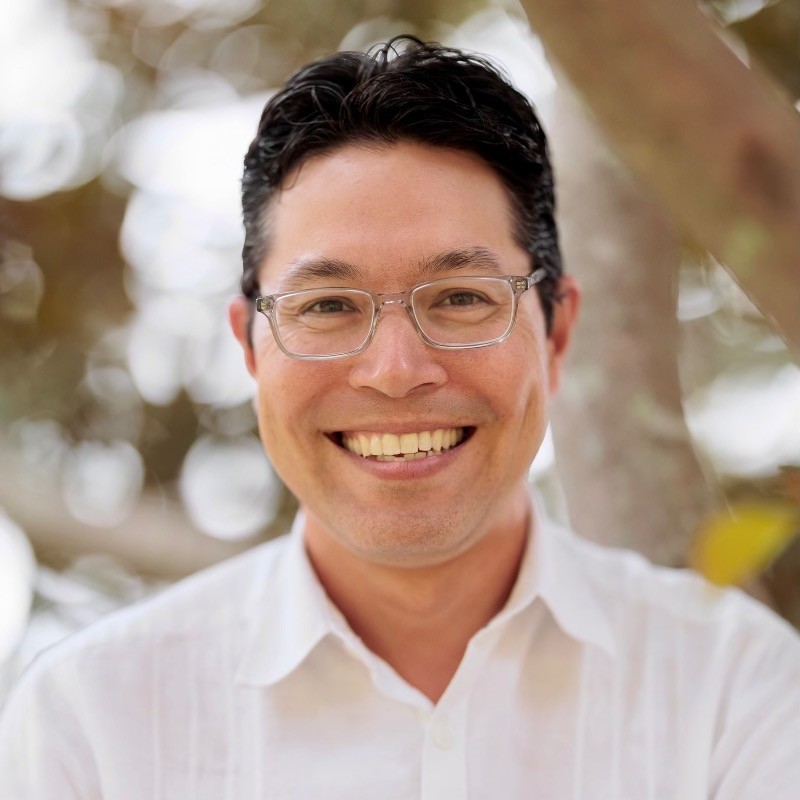
What does it take to build trust between law enforcement and one of Central Florida’s fastest-growing communities? From improving language access and creating new reporting pathways as an Asian American and Pacific Islander (AAPI) Liaison, Orange County Deputy Sheriff Thomas Lin offers a meaningful look at what supporting the communities through law enforcement can look like in practice.
In this episode, SMPR President Heidi Otway speaks with Deputy Lin about his decades-long career in law enforcement and the values that have shaped his career: commitment, perseverance, passion and dedication.
Heidi Otway: Welcome to the Fluent in Floridian Podcast featuring the Sunshine State’s brightest leaders talking about the issues most important to the people of Florida and its millions of weekly visitors. I'm Heidi Otway, and in this episode, I'm talking with Thomas Lin, an Orange County Reserve Deputy Sheriff. He serves as the Asian-American and Pacific Islander Liaison. In this role, he's helping strengthen trust and connections with Orlando’s growing community. Enjoy the show.
Deputy Lin, welcome to the Fluent in Floridian Podcast. We're so excited to have you as our guest today.
Thomas Lin: Well, good morning, and thank you for having me today on the show.
Heidi Otway: Yeah. Well, we have the great opportunity to talk with you about your remarkable career that spans more than 40 years, from your work with the FBI in Washington, D.C. to your long tenure with the Orange County Sheriff's Office in Central Florida. But before we dive into that a little bit, I want to go back to the beginning and find out what inspired you to pursue a career in law enforcement.
Thomas Lin: Okay. Uh, you know, like after high school, and like many many graduates, we probably have no clue sometimes what we're going to do.
Heidi Otway: Yeah.
Thomas Lin: So, my father- at the time, he was a scientist for the government and he had a friend who was a special agent in the FBI that said, "Hey, you know, maybe your son might want to try to, you know, look into the FBI. We're hiring." And he was actually able to give me a good word for me, and the process was pretty long, actually. It was like 6 months, I think. But I got in there, and that's pretty much how I started. And I wasn't an agent, obviously. I was what you call a fingerprint technician.
Heidi Otway: Oh.
Thomas Lin: And this is before everything was automated and computerized and everything. So, this is where you had to take a little, little uh low glass, magnifying glass, and research all the prints. And it was— it was challenging. (laughter)
Heidi Otway: Yeah. I would imagine compared to how they do it today. I'm a CSI fan, so.
Thomas Lin: There you go. Well, the funny the funny thing is I got, you know, when I was there I was able to get to view other things that people aren't able to view, like fingerprints of, you know, some of the celebrities and some, you know, foes and information on the people like Bonnie and Clyde like that. So, it was pretty interesting, though.
Heidi Otway: Yeah. So, what brought you to Orange County after your long career with the FBI?
Thomas Lin: Well, now I was there for a short time. Then I went to, when I became of age, you know, 21, I started applying for various police departments. And I actually got hired by the City of Alexandria, Virginia.
Heidi Otway: Oh, I love Alexandria.
Thomas Lin: They gave me the start there and, you know, it was a fantastic area to learn and experience and get the training that, you know, led me to the rest of my career here. Only, you know, one of the things that as far as up during that timeframe, you know, things are kind of a little sort of back in a little more time here where I was like one of two on my agency period there, of Asians.
Heidi Otway: Yeah.
Thomas Lin: And then, I was. We're only a handful in the whole entire D.C. metro area at the time.
Heidi Otway: Wow.
Thomas Lin: So, it was uh it was definitely some learning experiences there.
Heidi Otway: Yeah.
Thomas Lin: And of course, you know, back then you had a little stigmatism still a little bit, maybe a little prejudices here and there still, which still existed.
Heidi Otway: Yeah.
Thomas Lin: For many cultures. But it was one of those things where, you know, you had to if this is what you wanted, you kind of had to kind of grin and bear it.
Heidi Otway: Yeah.
Thomas Lin: And and continue to move forward, you know?
Heidi Otway: Yeah. Yeah. In the roles that you had in law enforcement, were you one of the first uh Asian officers to join the ranks?
Thomas Lin: In the Virginia, D.C. area, yeah, like I said, one of a handful there.
Heidi Otway: Yeah. Uh-huh.
Thomas Lin: And there was another lady that, she was Korean. She came, she went to the academy just one academy before me.
Heidi Otway: Oh.
Thomas Lin: And to this very day, I got them to move down here in Florida and we're all still good friends.
Heidi Otway: Oh, that's wonderful. That's wonderful. So, you worked in Alexandria, and then from there did you go to another department or did you make your way—?
Thomas Lin: Yep. I went from um, from Alexandria, I went down to Prince William County. Yeah, that's because actually where I lived in the Woodbridge area.
Heidi Otway: Okay.
Thomas Lin: And I actually lived down there, so I'm like, "Yeah, let me try it down there." And he was at— the city was fantastic work for, but there was limited ability to transfer around a lot. There was only a couple, you know, several positions there.
Heidi Otway: Uh-huh.
Thomas Lin: So, when I went down to Prince William, they had a lot more uh availability for lateral transfers and the different sections. And then, I guess, when that would come, what happened, how I got to Orange County was I had a friend of mine who was Alexandria had moved down and joined Orange County.
Heidi Otway: Yeah.
Thomas Lin: He says, "Tom, it's so great down here. You got to come down here. You know, the weather's great. I mean, everything's great." And I had a boat at the time. I was certified in scuba. So, I'm like, "You know, that makes a lot of sense. Go where it's warm, water, the whole nine yards." And so, I applied and was able to get in there pretty quick and that's how I got my start here in Orlando.
Heidi Otway: I love that. So, I was looking at the data with my team and it says according to the Orange County Sheriff's Office, they have 1,600 full-time sworn law enforcement officers in the ranks and only 28 identify as Asian-American or Native Hawaiian Pacific Islander, and we usually say that's AAPI. So, what role do you play now uh with the Orange County Sheriff's Office when they launched the Asian-American Pacific Islander Community Liaison Initiative, um which helps bridge the gaps and builds trust with the local Asian community in Central Florida? So, can you tell us a little bit about the launch of that and what role you play?
Thomas Lin: In 2021, our Sheriff Mina- the Sheriff who is still currently Sheriff now, great guy- he recognized through our community leaders the need and they inquired about maybe a liaison group for the AAPI community. With Florida, Orlando, in general, we're... well, growing fast for the AAPI population.
Heidi Otway: Yeah.
Thomas Lin: In Orlando, I think our numbers are almost reaching up to almost 9%, between 7 and 9%, I think, equating to about 85,000 people alone, just in the Orlando area.
Heidi Otway: Yeah.
Thomas Lin: And throughout Florida, you have what, over half a million and still growing. And I think the reason for that is because, you know, Orlando, and Florida in general, I think it's a great state and it's a very very diverse state.
Heidi Otway: Mm-hmm. Mm-hmm.
Thomas Lin: And I think people really appreciate that and like that and to include, you know, the all the wonderful parks and everything we got. (laughter)
Heidi Otway: Yeah. Yeah.
Thomas Lin: And so, when they started this, they asked me I was one of the few that said, "Hey, I'm, you know, I'm interested in trying to help out with this." And one of the community leaders that, you know, suggested this program was um Sally Wong. She's the mayor's assistant.
Heidi Otway: Mm-hmm.
Thomas Lin: Sally and I go back, probably almost 15 years as friends through the Asian-American Chamber of Commerce.
Heidi Otway: Yeah.
Thomas Lin: And so between her, myself, and a few other community leaders, we kind of brainstormed to come up with a program. So then, with the Sheriff's Office, I could I kind of, you know, on the law enforcement part, I'm like, "Well, what's important for the community?" One, we know that, including my own family, that they're very private individuals. They don't like to put their personal things out, you know, to see. And they're very quiet about that. They don't want to get involved a lot. So, I had a friend of mine who was a news reporter. He said, "Tom, are there hate crimes going to run here?" And this occurred back when we had a lot of national publicity on some other problems that happened a few years back.
Heidi Otway: Yeah.
Thomas Lin: And I said, "No, we don't really have any hate crimes listed here." And she's like, "What?" I said, "The problem is if there probably is some, but no one's reporting it."
Heidi Otway: Right.
Thomas Lin: "And if you're not reporting, we have no records of it." So, the biggest things I had to establish with the Sheriff's Office and Sheriff, which is he was great, she he supported the ideas, is we implemented number two several things. First was a couple different main Asian languages on our website.
Heidi Otway: Yeah.
Thomas Lin: And then, we also listed all the uh AAPI liaison officers that we were gathering up.
Heidi Otway: Mm-hmm.
Thomas Lin: And I also helped create, you know, had them create an email link. If someone doesn't want to call us, it's not quite meeting the need of a 911, they can shoot us an email. And for the most part, it's been mostly civil questions and everything, but it's something where we can still respond back to them individually if they don't want to come down to the station, and to give them a little help and direction on that. One other thing was the difference- knowing the difference is educating on between hate crime and hate rhetoric.
Heidi Otway: Yeah.
Thomas Lin: And so, I came up with a way using, of course, the Sheriff's Office policies and procedures to be able to capture that and record it and issuing a tracking number for people. That way, if there's a constant problem in a certain area, certain people, that we can at least track it and say, "Okay, we got a problem here." Where it didn't quite meet the needs of a police report, it's still a way to capture the information on a hate incident.
Heidi Otway: Yeah.
Thomas Lin: We had one that went viral here a few years back all over the internet. It was called King Cajun Crab Restaurant. Things got ugly and out of hand, so I ended up responding down there. I, you know, talked them through what they could or couldn't do and that we're here for their support, no matter what. And I think that they felt a little more comfortable after that. And again, it's just having that extra resource out there for folks.
Heidi Otway: Yeah. So, how has been the response since you launched since the Sheriff's Office launched this new liaison initiative? What has the response been community-wise?
Thomas Lin: Actually, it's been very successful. It's been positive. In fact, it's funny because I'm working right now with a New York New York NYPD officer and a DA's office for a conference to come down here in Orlando next year.
Heidi Otway: Yeah.
Thomas Lin: And well, when they contacted me, I said, "how did you find me?" They said, "Well, through your website, the Sheriff's Office website." So, I guess that's working (laughter). Even our undersheriff says, "Yep, I guess it is working." I said, "Yeah, it is." And we've had other contacts reach out as well, so it's been I think a very positive thing.
Heidi Otway: Were you all the first law enforcement agency to implement this kind of initiative in the US?
Thomas Lin: I'm not sure about the US, but I know in Florida for sure that we're the first. There may be some splinter groups maybe South Florida and that's that's pretty much it, though.
Heidi Otway: Wow.
Thomas Lin: So, I think that we're kind of what I like to say- that we're kind of a model for this liaison group uh for Florida. But I'm thinking where you have like California, in fact, going back with these uh New York contacts I got, they're with the National Asian Peace Officers Association and they go around the whole country.
Heidi Otway: Yeah.
Thomas Lin: And make contacts and conferences and so they said that there are some a lot of contacts in some bigger cities.
Heidi Otway: Mm-hmm.
Thomas Lin: But you know, some smaller areas maybe not so much. So, again, we're expanding. They even said, "You know, Tom, we um we don't have one in Florida." And I'm like, "Uh-oh." (laughter) And so, I'm like maybe you want me to look to do a little more work here. (laughter)
Heidi Otway: Yeah. (laughter)
Thomas Lin: And so we'll talk. (laughter)
Heidi Otway: Well, that's good. That's good. And have any other municipalities in Florida reached out to you just to ask a little bit more about what you're doing because they may want to do the same in their district?
Thomas Lin: They haven't actually, I think, had the opportunity to reach out to me. I know I've reached out to a couple agencies as well.
Heidi Otway: Okay.
Thomas Lin: Because, you know, there's some smaller, even smaller agencies. We have an Ocoee PD and I noticed in one news interview that, "Hey, he's a Vietnamese officer." So, I had to reach out to him and say, "Hey, come on, join us." (laughter)
Heidi Otway: Yeah.
Thomas Lin: And we do have, of course, our network I was talking about. We've reached as far as Miami, south.
Heidi Otway: Great.
Thomas Lin: We work with the Taiwanese Consulate down there, and so, we have good uh bridge communication. And then, of course, a lot of our members are through the Chamber of Commerce, and affiliates have contacts overseas as well. Recently I had a request maybe I can help with a group organization in June, with some uh police-type questions and issues. And I've acted- Now I don't want to butcher the name, but it's pronounced Shakti, and it's an Indian organization and folks out of West India, because Indians are still considered Asians.
Heidi Otway: Yeah. Yeah, yeah.
Thomas Lin: So I'm working with them to try to help them with their project in June. So, it's, yeah, it's been very positive, a lot of outreach here.
Heidi Otway: I'm loving hearing that. Well, for everyone who's listening, I hope you all are enjoying this conversation. We're going to take a quick break for a short message from SMPR and we'll be right back.
The Fluent in Floridian Podcast is brought to you by SalterMitchell PR, a communications consultancy focused on helping good causes and our clients win. We provide strategic insight and guidance to organizations seeking to make an impact in the nation's third most populous state. Learn more at smprflorida.com. Now, back to my interview with Orange County Reserve Deputy Sheriff Thomas Lin.
We're back with Deputy Sheriff Thomas Lin, a decorated and distinguished law enforcement officer based in Central Florida. So, Deputy Lin, I want to ask you a question about, it was a year after you assumed this unique role that you received the House of Representatives honor for your work as a distinguished leader in Central Florida for AAPI Heritage Month. So, that happened in 2023, and you assumed this position in 2022. That is pretty remarkable. Can you talk a little bit about what it was like to receive this honor, what it means to you and the work that you're doing?
Thomas Lin: It was, you know, a very kind award, and I thank the people for it. And it was a recognition through one of the congressmen, a local congressman.
Heidi Otway: Mm-hmm.
Thomas Lin: And great guy, really nice guy, and he appreciates a lot of the outreach as well, again because of the concentration and a growing population here in Central Florida of Asians. So, it was a proud moment.
Heidi Otway: Yeah. Were you surprised?
Thomas Lin: Oh, yeah. I was a little surprised at that and it's funny because in the bio for that, I had to throw my wife's name in there. She's like, "What? Why'd you put my name?" I said, "Well, because now it's in the Congressional Record." (laughter)
Heidi Otway: (laughter) Right, right.
Thomas Lin: "You can never say I didn't do anything for you." (laughter)
Heidi Otway: Right. Right.
Thomas Lin: So, it was good though. And I appreciate and again, you make so many great folks out there, great community leaders. And you make long-lasting friendships as well.
Heidi Otway: Yeah, I love that. So, let's talk a little bit about your cultural background and how it may be influencing the work that you do and your approach to outreach and relationship building. So, from your perspective, why is this kind of connection with this community so important, especially to the diverse region of Central Florida? And like you mentioned, it's growing quickly. My kids live there, my grandkids live there, and every time I go, I feel like, "Okay, there are more cars on the road, there are more developments being built, more retail and shopping and things." So, let's talk about, you know, the role you play and how important it is to build relationships in the Central Florida area.
Thomas Lin: I think one of the biggest things is the culture and some of the hard- I wouldn't say hardships, but the challenges that people face. I've been there, done it. I understand.
Heidi Otway: Yeah.
Thomas Lin: Back when I was growing up, they didn't have any type of resources like that back then. So, it was a little tough sometimes. But in today's times, yeah, we got a lot of resources out here, everything from businesses to medicine. I mean, you have a lot, a plethora of it out there. And to me, it's good that I can if I can help out people where something I didn't have help on- it's the thing about helping your community out. To me, it's what my job's always been about, you know? Helping the community and directing them in maybe the right way.
Heidi Otway: Yeah. You mentioned earlier in our conversation that the Asian community is very quiet, they keep to themselves, they really don't, you know, broadcast what's happening. Have you seen a shift since you've assumed this role? So, we're now what, it was launched in '22 and we're in 2024, so about 2 years ago, are you seeing a change in that community because of the work that you're doing and the Sheriff's Office?
Thomas Lin: It's gradual, but it is moving forward. And the funny thing is we had one of our liaisons. He's Vietnamese, and he also speaks Vietnamese, the dialect and everything. He's a young guy, and one time, he went to a Vietnamese function, and he was trying to have a conversation, maybe talk to an older gentleman and the older gentleman's like, "Now, who are you?" But, and sometimes I think that I have an advantage because I've been around a little bit longer than some of the younger guys have. But they're learning, though. I mean, even growing up myself, it's like my father was like, "You know, it's very quiet. I like it. It's pulling teeth out of him to get an answer sometimes." And then when I got the answers, then it wasn't really, "Okay, Dad, never mind. I'll go ask Mom." (laughter)
Heidi Otway: Right. (laughter) So, I would have to imagine that your family is really proud of you and the work that you've done in law enforcement.
Thomas Lin: Well, they're very happy and I'm happy with my family too because, I mean, you couldn't have a better group of siblings growing up and everything. My brother, he's a former retired government person and also a Harvard business graduate.
Heidi Otway: Yeah.
Thomas Lin: I have a sister who's former State Department, retired, and she made the rounds around the world a little bit. It's pretty fun, pretty cool. And my other sister helps work with the military groups and base where she's at. So, I got to say sorry for picking on you guys when I was younger, but you're a great bunch of siblings.
Heidi Otway: Love that, I love that. So, you're also a member of the Asian-American Chamber of Commerce of Central Florida, and you've been with them for over a decade, and you serve as the president of the Board of Directors. Can you talk a little bit about that role that you have? And it's my understanding that you also have a small business.
Thomas Lin: I had a small business. I ended up giving up after 10 years because I'm like, "Well, I'm actually making more money working off-duty with the Sheriff's Office than I was making with the business." So, you know, it's kind of heavy on the time and effort and the money. So, yeah, I had to let the business go, but as far as the Asian-American Chamber of Commerce, it's been an experience for me. When I say experience, it's because now I have had to switch roles from strictly thinking law enforcement and the aspects of that to business. So, we deal with there when in fact, some of our sponsors we have like Universal Studios.
Heidi Otway: Yeah.
Thomas Lin: We have them and some others like Orlando Health and some big ones like that. And great people. But you have to work a little bit differently from what I'm used to. And that's probably the biggest thing that I've had to adjust to. The good thing is, in fact, that because of the law enforcement all these years, paperwork's got to be done right, you know? I mean, (laughter) I remember a time when you didn't have computers, you couldn't have an auto correct.
Heidi Otway: Right.
Thomas Lin: Sometimes that's good and bad. But anyways, I remember at times when the supervisor would take a little red ink to my work because I hand wrote everything, and then you had to start all over again. So coming over to the business part of it, yep, you got to do that paperwork right and got to have some rules here and policies and procedures. So that kind of helped me with that area.
Heidi Otway: Okay. So, law enforcement, former FBI, business owner, board chair of the Asian-American Chamber, um down in Central Florida. I got to ask, when you're not doing all of those things, what do you do to enjoy life in Central Florida?
Thomas Lin: Well, the first thing… I can't disclose the beach because I would take my metal detector down there, and wait for one of those coins to wash ashore. (laughter) That's one of the biggest things I love doing is using metal detectors on the beach. Sometimes getting in the water depending on if, what they call, the baitfish are running. I mean, baitfish is when the little sharks are around looking for that one, so I don't get in the water too much. (laughter)
Heidi Otway: Oh, wow, wow. That's one of my favorite things to do.
Thomas Lin: And then, I got a lot of housework. You know, all the years in law enforcement, there's a lot of little neglect of my house and yard. And so, I'm catching up on that as well.
Heidi Otway: Well that’s good.
Thomas Lin: So, I was able to justify buying one of those little skid loader Bob-cats for my house. Because I told my wife, I said, "Look, I'm retired, sort of, and I don't want to die in a yard with a shovel in my hand. So, I'm going to buy this Bob-cat to help me out." She said, "Okay." (laughter)
Heidi Otway: (laughter) I love that.
Thomas Lin: I got that one by. (laughter)
Heidi Otway: I love that. Well, what advice do you have for anyone who's listening or watching this show, they're of Asian descent and they want to make their way um into careers in Florida? What advice would you give that young person uh with all the years of experience that you bring?
Thomas Lin: Well, for success: knowing there's going to be ups and downs, no matter what field you go to. You got to be committed, you have to persevere, you got to have dedication to what you're doing. Believe in what you're doing. You have to have passion for it. I've seen some folks that, you know, didn't last very long. Maybe ran into bad situations, and said, "This is not for me." And I can appreciate them for that because they're like, "Okay, well no sense in getting hurt out here," and doing something if you're this is not for you. I think this has stayed with me through the years. And of course, with Orange County and here in Florida, we had a lot of diversity as far as within what you could do at the Sheriff's Office. I've done everything from boat work, scuba work- I've got like, you know, hundreds of uh several hundred hours in a helicopter. It was just amazing and, you know, it's like an adventure.
Heidi Otway: Wow.
Thomas Lin: A non-stop adventure. You got to you got to be committed, though. Keep in mind too, you have to make sure you embrace your family, because over the years, you're gonna have missed dinners, missed holidays, long hours, (laughter) and sometimes you'll come home with some frustration knowing you had a bad bad scene or something that a lot of people don't see, which is good. And just to keep at it. For me, it's been great, it'll provide me with a nice nice nest egg afterwards and uh, yeah, but again, you just got to keep at it. Persevere. It's not for the faint-hearted sometimes, because you're going to- you see it in the news all the time- see some ugliness out there.
Heidi Otway: Yeah.
Thomas Lin: And some bad things happen. I've lost friends over the years, and so it's something that you got to just keep moving forward.
Heidi Otway: Yeah.
Thomas Lin: And you do that, you'll be okay.
Heidi Otway: Yeah. Well, Deputy Lin, I want to thank you so much for being our guest on the Fluent in Floridian Podcast. I learned a lot from you today. I was just inspired by what you said, and I don't know if you noticed, I was nodding because—
Thomas Lin: Oh, yeah, it's fine. (laughter)
Heidi Otway: —all of that is so true. But thank you so much for being a guest. And I know that our listeners are going to get a lot out of this conversation, so thank you.
Thomas Lin: Well, and thank you for having me and it's been an honor and privilege to be here with you, okay?
Heidi Otway: All right. Thank you.
Thanks for listening to this episode of the Fluent in Floridian Podcast, brought to you by SalterMitchell PR. Our firm is focused on helping good causes and our clients win by providing strategic communications, issues management, crisis communications, media relations, marketing, and creative services. Our clients include Fortune 500 companies, small businesses, state and local government agencies, and non-profits in Florida and across the US. As we celebrate our 25th year in business, we want to thank our clients, employees, and friends who've helped us reach this milestone. If you need help telling your Florida story, SMPR has you covered. Reach out to us at smprflorida.com.
Be notified when new episodes of the Fluent in Floridian Podcast are released and receive public relations, communications and marketing expertise from SalterMitchell PR.
SalterMitchell PR is a full service communications consultancy helping good causes and our clients win. For 25 years, we have provided strategic insight and guidance to organizations seeking to make an impact in the nation's third most populous state. We know Florida. We understand the diverse landscape of Florida. We are fluent in Floridian.
Tallahassee Headquarters located at:
117 South Gadsden Street,
Tallahassee, Florida 32301
(850) 681-3200
Copyright © SalterMitchell PR 2021. All rights reserved. Privacy Policy.